

- Perimeter security alone doesn’t fully protect law firms
- Internal user behavior often creates unintended security gaps
- File-sharing links can expose sensitive data if permissions are too open
- Shared folders can be used to deliver malware or ransomware
- Many breaches begin through “back doors,” not the firewall
Insights: How Everyday File Sharing Creates Risk
Most law firms believe their security posture is strong because they’ve invested in firewalls, antivirus software, and advanced edge protection. In many cases, that’s true — those tools are doing exactly what they’re supposed to do.
The problem is what happens inside the firm.
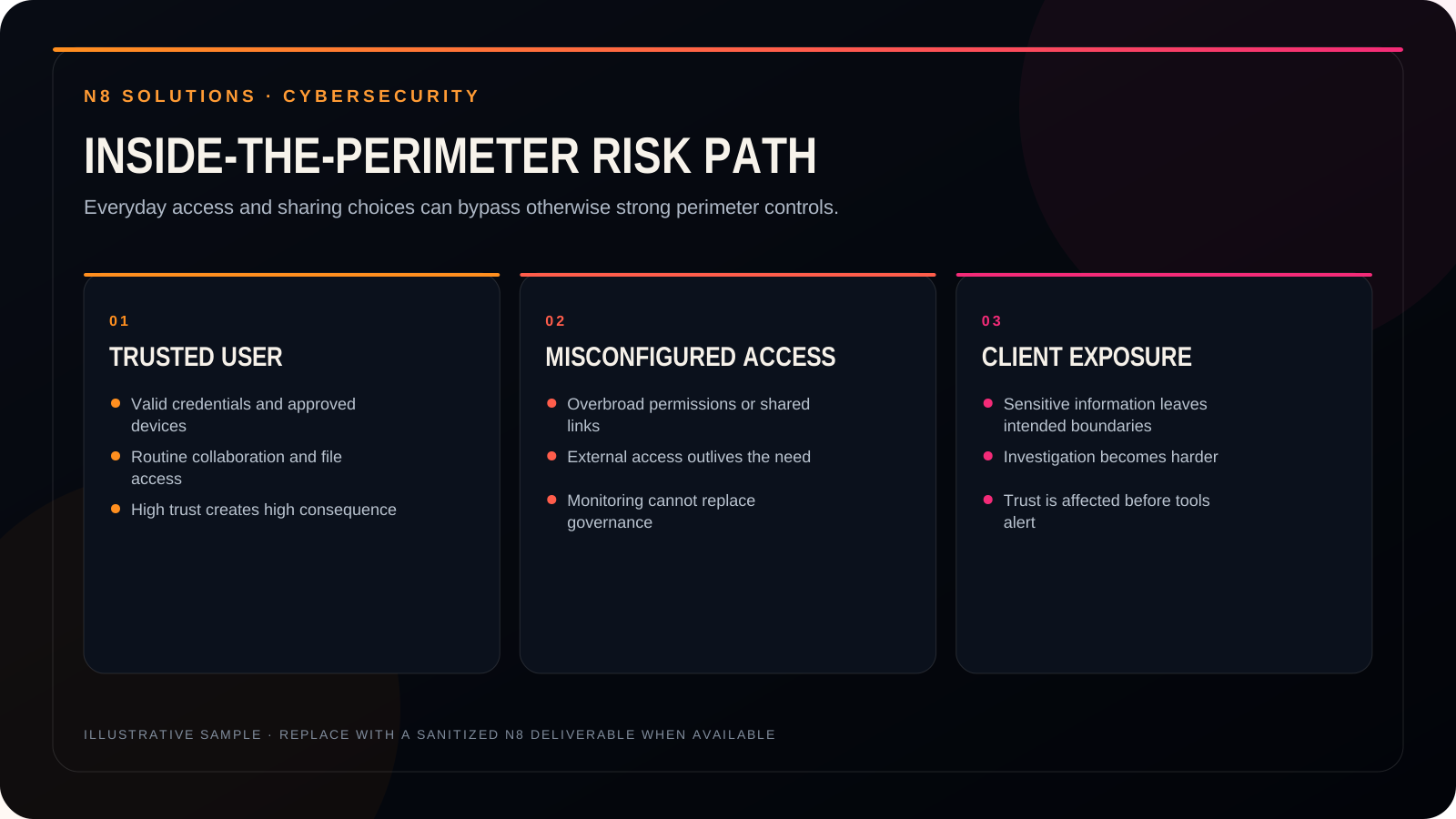
Employees are focused on getting work done. When sharing files with clients, they often choose the fastest, easiest option: sending a folder link. If permissions are set too broadly or links never expire, that shared access can quickly spiral beyond its original purpose.
If a client’s system is compromised, that shared link can be passed around or exploited. Sensitive data — health records, banking information, personal identifiers — may be exposed without anyone at the firm realizing it.
The risk doesn’t stop with data leaking out. Shared folders can also be used as a way into your environment. Malicious actors can drop infected files into shared locations. When a user opens what looks like a legitimate document, malware can spread across the firm’s infrastructure.
In some cases, attackers don’t lock systems at all. Instead, they quietly gain remote access and monitor activity over time, collecting information that can later be used for larger breaches or fraud. This type of access often goes unnoticed far longer than ransomware.
See what this means for your environment.
Bring the real situation. N8 will help separate the important risk from the noise and identify a practical next step.